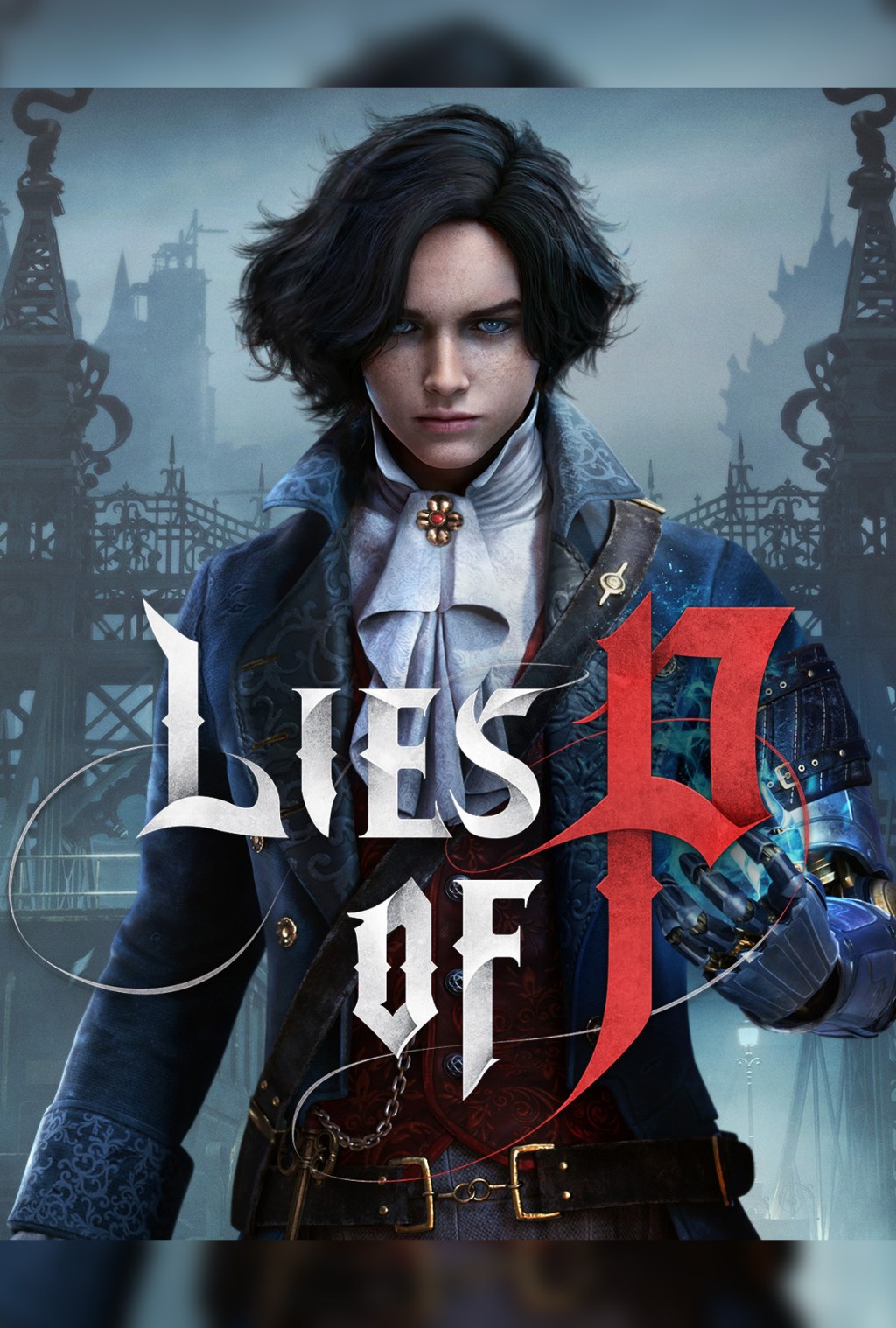
Lies of P (2023)
By Neowiz, Directed by Choi Ji-Won
For as long as I could remember, I couldn’t find the appeal of Souls-Like game. Why would you go through so much hardship just to enjoy your game? I started Lies of P not because I was interested in exploring the genre. Rather, I am working on a Gothic Horror Card Game: Legions of Kadmon. At the same time, I was also writing a tie-in novel for this game titled: A Crown for the Promised. Both the game and book took inspiration from the Belle Epoque era, of which, the game Lies of P also took reference from. When I saw Neowiz released the trailer for the game, I knew that I had to play it. I immediately fell in love with the aesthetic of Lies of P and the premise of playing with an edgy Pinocchio. So when the time came for me to play, I booted up the game and sit for 50 hours. And oh my… I think this game goes to my top 10 games of all time.
Similar to all my other journal entries, this entry is not meant to be a review. If you seek a review of the game, I’ve left a Steam review here.
Anyway, this entry will of course discuss a little more on the philosophical side. And of course, as always, how Lies of P had inspired me.
As with my other journal entries, EXPECT A MAJOR SPOILER HERE! Before reading this journal of mine, I encourage you to play the game first, if you have plans to play it.
The Original: ‘The Adventures of Pinocchio’ by Carlo Collodi
For a long time, I have misinterpreted the message of the story of Pinocchio to “Don’t Lie”. I was introduced to Pinocchio through Disney’s interpretation of the character. The visuals of his nose growing as he lie, caught attention to young viewers and so my young self would link Pinocchio’s story to telling lies.
When I finally had the chance to read Carlo Collodi’s work—The Adventures of Pinocchio—I was already an adult. It was during this reading session I realised that the entire point of Pinocchio was never about lying. Instead, it’s about working hard and the search of humanity. And that only by working hard can a wooden puppet find humanity.
I chose to play Lies of P because Neowiz aimed to retell the story of Pinocchio in their own fictional world of Krat. I was intrigued, curious if Neowiz would adopt the modernised version of Pinocchio, popularised by Disney, or if they would go back to Pinocchio’s roots. When I finally pressed that ‘New Game’ button, the first thing that popped in my screen are the words—In honor of the great writer Carlo Collodi—my writer’s instinct tingled.
“Please don’t mess the story up.” I hoped.
They didn’t. They transformed a children’s story, keeping its powerful message intact, and turned it into a game with a dark, gritty world and a touching story about finding humanity.
What Makes Us Human?
It is a question I often ask myself. As a matter of fact, maybe the reason why I chose to become a writer is because I want to explore this question in depth. Plethora of movies, games and books presented humanity in different ways, but I believe it stemmed to a single concept.
We are humans because we show emotions.
Lies of P understood this. And they linked emotions to Pinocchio’s association with lies. The game uses lies to quantify emotions and thus… Humanity.
A puppet cannot lie. It is one of the key sentences in the game and a powerful one too. Puppets in Lies of P are machines. Programmed to always state facts and truth. Being able to lie is a distinction possessed by the main character—Puppet of Gepetto. Something that pulled him closer to humanity.
Ask yourself? Why do people lie? Are lies not driven by emotions? Shame, guilt, pity, and even compassion. We lie because we are shameful of the things we’ve done. We lie because we know what we did is wrong. We lie because we don’t want to hurt other people’s feelings.
Throughout the game, often, the Puppet of Gepetto is given choices. Usually, a choice comes with two different responses. One is usually a lie. The other is the truth. This is the ‘lying’ mechanic of the game. Players are to choose whether or not they wanted to lie or otherwise. While one can definitely think too much about this, the mechanic behind these choices are simple. If you choose to lie, you will increase your humanity. If you speak the truth, your humanity will remain. After all, a puppet cannot lie.

So, does that mean that lying makes us human? Is that the entire message of the game?
It’s deeper than that.
Feel
Towards the final stretch of the game, after you raised Puppet of Gepetto’s humanity, you’ll realise that the game’s ‘lying’ mechanic changes. The choices given to you is no longer a “Lie” or a “Truth”, instead, it’ll make the player think, “As a human, what would I do?”
The most obvious example I can give you is the scene where the Puppet of Gepetto is given the choice to spare or kill Sophia. In this scenario, it’s no longer about lying. It’s about what, we, the player, role-playing as the Puppet of Gepetto, FEEL is right to do.
Another important distinction will be during the climax of Eugenie’s story, where the Puppet (the Player) is given the option to tell lie or tell the truth about Alidoro. Whatever choice you’ve made, you will get a valuable reward, the game’s way of telling you that you’ve made a decision a human would do. Now, telling the truth or lying no longer matters. Because in both cases, we can see that the Puppet shows emotion and morals when he presented Eugenie with an answer.
All of this leads to the final battle against the Nameless Puppet. This battle is way more poetic than just a Final Boss. This is a battle triggered when you decided that you want to become a human. That you’d rather FEEL than obey your father. If you notice, none of the two options are lies. Both are simply choices, and once again, the game asks you, the Puppet of Gepetto, to do what you FEEL is right. The battle itself culminated into a battle of principles, as if you are watching a reflection of yourself should you chose to not be a human. Should you’re just… a puppet.

Can We Feel?
The reason why Lies of P resonated so much for me is because of our harsh reality today. I don’t think people FEEL enough for others. Lots of us does bad things to each other. And when we claim that we feel for each other, a lot of us are pretentious. Once our feelings became conflicted, we condemn each other.
In a world where Puppets rule, maybe showing humanity can be reduced to a simple act of lying. But even Lies of P taught me that it is much more than that. It’s about not being afraid to express what you FEEL is right. And at the same time, understand how other people FEEL when they express their feelings.
This is the key to humanity, I think. To understand our own emotions and understand other’s. To accept that everyone feels differently, and that we don’t force our own feelings upon others. I wonder then, can we do that? Can we learn how to feel? We have to. Or we’ll all be reduced to nameless puppets.
Grand Covenant’s Fourth Law: A Puppet Cannot Lie.
Hotel Door
 Joshua Dharmawan
Leave a comment